Posts in Personal Development

Category: Personal Development

  • The Accidental Author

    The Accidental Author

    If you’ve been on this business growth journey with me for long enough, you’ll know that foundations are a key to success, especially when they are tied to strong vision and core values.

    I’ve lost count of the number of people who have asked me who my target market is, what’s my niche and who’s my ideal customer.

    The answers to some of these questions are still shifting and changing but there’s a definite certainty in most of them.

    Part of the work in finding those answers was looking back on all the years in my career to see what I’m actually about. Going really detailed with it and then putting a curious slant on it with a ‘why’ or a ‘so what’ and looking at the past with a future focused mindset:

    • Why does that shape me now?
    • What can that past experience bring to this situation?

    I was tentative at first but the more I’ve looked back over the last few years, the more I fell in love with my past career all over again. Those of you who have gone through redundancy will know the impact it can have, the feelings you can take with you and hold against the past because of how it ended.

    The focus ends up being all on that final chapter of an otherwise outstanding book! And it can sometimes take time to remember that the earlier chapters were overflowing with life, learning and joy.

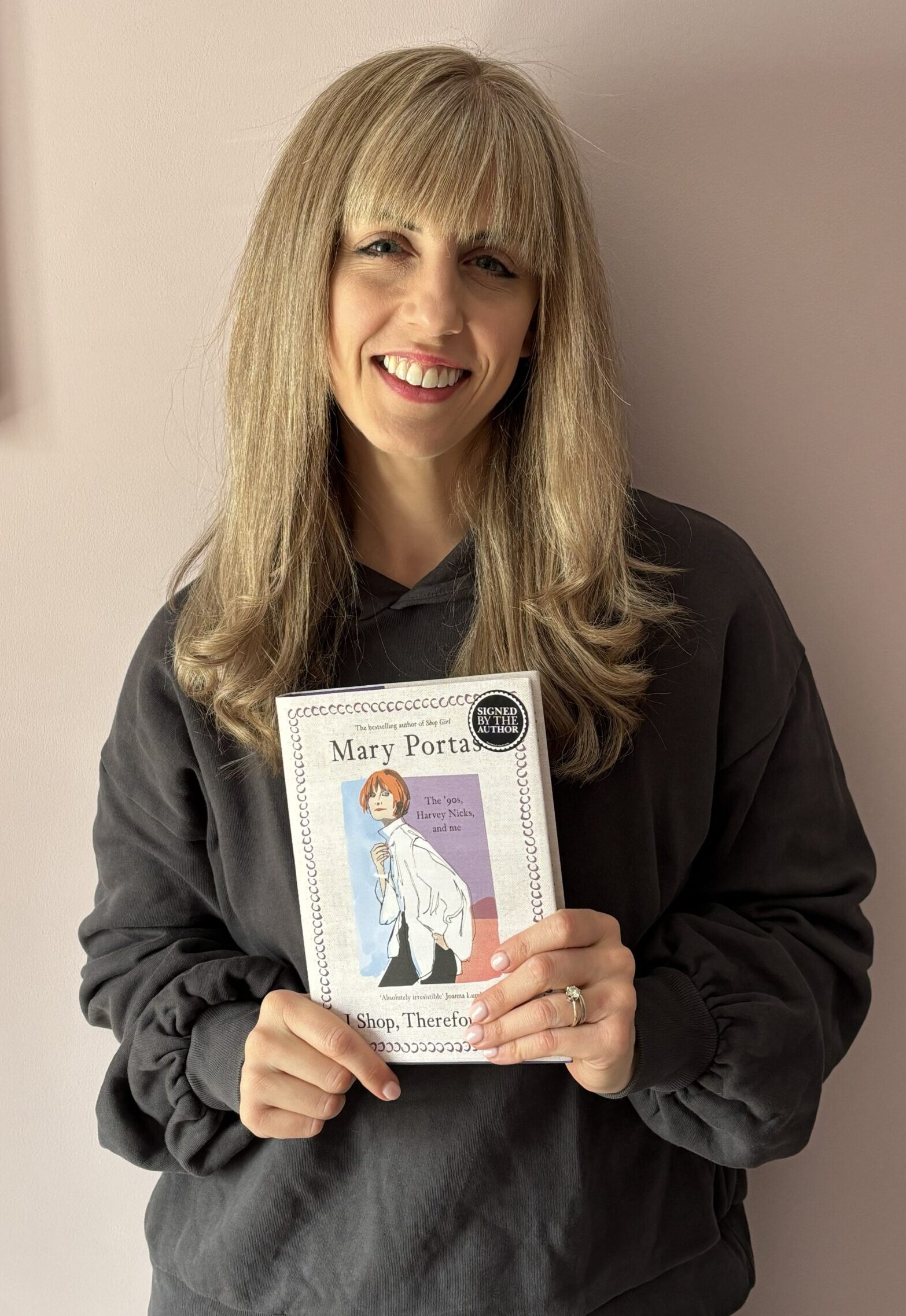
    Speaking of books – I’m not one to write a review but when a book grabs you the way a recent one did me, you have to tell your world about it.

    That book was ‘I Shop, Therefore I am’ by Mary Portas.

    I happened upon the book while on a girls weekend with mum. We were at Good Housekeeping Live. Mary had been the resident author a few days prior, doing book signings. I picked up the book and read the synopsis:

    ‘From the legendary doyenne of the high street comes a no-holds-barred account about her time as the window dresser and creative director for Harvey Nichols that is immersed in the fashion world, full of juicy anecdotes and bursting with ‘90’s nostalgia.’

    I got excited about this… Let’s not forget, I am by trade ‘a retailer’. I read the inside cover summary; the final paragraph started with:

    ‘Mary takes us behind the shop window – to the people who kept the show on the road and the early lessons that shaped her career.’

    I was sold. With a big smile on my face, this 43 year old approaches mum and says Please can I have this for Christmas?’!

    Now, I could have bought it myself but it felt like a gift, like something I’ll be excited to open on Christmas Day and that will also remind me of this great weekend shared with my mum.

    The book sparked something in me. Mary wasn’t a salesgirl, she was a creative. But the way the book weaves through the behind the scenes of retail, fashion and high street reawakened all of the glamour, pride, humour, exhaustion, chaos and sometimes horrors that make up the mystifying world of being a store manager in ladies fashion…

    Oh the stories I could tell… and do you know what? I think I just might!

    When I sat down to write this blog, before I knew it, I had eight pages of A4.

    I realised, it wasn’t a blog anymore, there was a force in me to start writing my story from the beginning. I want to revisit all of those memories, all of those special times, the struggles, meeting L&D, working at headquarters, the fashions, the sales, the insane amount of hours in the workdays, the endless journeys across the country and most importantly, the incredible people I worked with, most notably all my wonderful Wallis girls, the core of whom are still at the centre of my friendship group today.

    So, I have Mary’s book as a shining inspiration that told me how special my story with Wallis was. And how much of it is still helping me today.

    I’m still living the brand… only this time, it’s my brand!

    So I am it seems, accidentally writing a book! The book is a long way off completion – it may never be. It may never see the eyes of anyone outside my office but if that’s the case, I’m still doing it for me. And I’m excited to see where it goes. I’m so in love with revisiting those days and creating something from it.

    So with a little thank you to Mary Portas, I’ll get back to my pen and paper. But before we wrap up, let’s reflect:

    • What story from your past still has something to teach you today?
    • What experience might you have undervalued that actually shaped your brilliance?
    • And what could you create if you simply allowed yourself to begin?
  • From Missed shots to mindset shifts

    From Missed shots to mindset shifts

    How Reflection Transforms Learning On and Off the Table

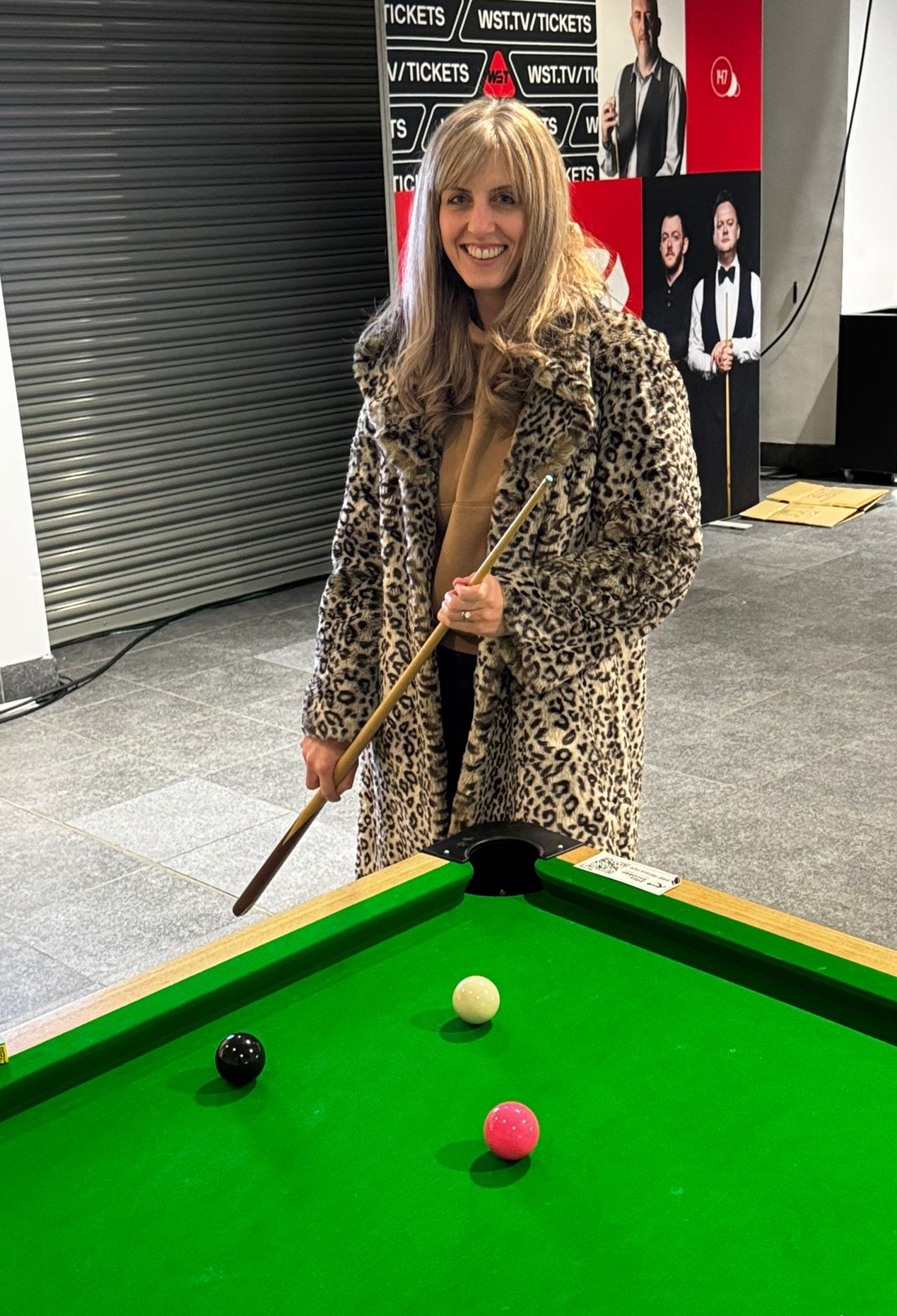
    I’ve been inspired to write this months blog thanks to the many snooker tournaments currently filling my tv and a recent visit to the championships. So, I encourage you to ‘take a break’ (pun intended) and enjoy this read.

    Watching the championships reminds me how much mastery relies on repetition and reflection — something that’s been front of mind as I begin my new L&D qualification. Whilst I’ve been in the industry for a long time, I haven’t had formal learning in it for around 20 years. I wanted some tangible evidence of the work I’m doing in both my employed and self-employed work and also an up to date learning on the landscape of L&D as a whole.

    In a recent training input, the tutor used the analogy that the training session is like a gym induction.

    Once you’ve had your gym induction, are you immediately fitter and healthier?

    No, what makes the difference is the repetition, consistency and use of that learning.

    Remember my quote from a while back ‘Personal & Professional Development is a Lifelong Journey’.

    Well this came into my mind again. It’s not one and done! We can’t expect someone to learn something once and become an expert in it, or perhaps even remember it! And in a world overflowing with information, that message feels more important than ever.

    Nowadays we’re surrounded by learning noise. Emails arrive packed with links to more resources, social media feeds point us to articles, podcasts, webinars, courses… it’s endless. You could spend an entire day consuming content and still feel like you’ve learned nothing.

    How are we supposed to remember it all?

    The truth is: we’re not. You don’t have to follow every link, save every post, or absorb every idea. It’s perfectly fine to read something and let it go — and it’s equally fine to dive deeper when something genuinely resonates.

    This is where choosing just enough becomes essential. Not everything is meant for you. Letting some things pass you by isn’t a failure; it’s a strategy. What matters is the quality of what you engage with, not the quantity. The growth comes from reflection, absorption, and repetition — not from trying to consume everything that crosses your screen.

    With permission, I’m sharing a little real life story about the power of reflection here.

    When I first began my coaching qualifications, I excitedly wanted to try the tools and questions out on my husband. It did not go to plan! Now sidenote here, you absolutely can’t be a coach for your spouse or even family members. But for the sake of practice he agreed.

    But he resisted the interaction and didn’t see the value in it, once quoting to me ‘I’m un-coachable’.

    Oh dear, not a great start when I was seeing great benefits from everyone else!

    So, I didn’t try again, but I did press on with my journey and he was there for it all, by my side, watching the growth of me and the business, seeing the feedback coming in, creating great marketing content for me (sometimes reluctantly!).

    Around a year ago I noticed him stuck in a loop with his snooker. A game he’s loved all his life – and one he’s genuinely good at. He wasn’t winning games, felt he was letting his team down, not seeing any growth in his practice and it was leading to an anxiety around playing and almost an avoidance. So, conversation style, I gently started with the coaching questions around what was going on. What we got to together was the ‘stuckness’ in any improvement.

    The key here was to dig deep on the why and find out what was going on.

    Why was it important? What needs to be different? How do I feel when I play? What feelings come up ahead of a game?

    Then we can take action. We can know the barriers that are needed to overcome.

    I suggested very small journal notes after every game or practice. How did it feel? What went well? What could be better?

    And the most important one: ‘What will I do differently next time?’

    Over a period of 3-4 months, the transformation was incredible. The enjoyment came back, the deeper understanding of the way he played the game, repetition after repetition of shots. Suddenly there was no anxiety around game nights, win or lose there was still enjoyment. Every reflection from them gave insight into what needs focus at the next practice. This growth is giving him the most important thing: confidence.

    This confidence has led him to be brave enough to now do his own snooker coaching qualifications. The next part of the growth journey for him and I could not be prouder.

    It was the biggest win for me when he said what a difference the coaching questions and reflections had made to him. And to have him admit that maybe he isn’t un-coachable!

    Watching him shift from frustration to confidence reminded me how powerful reflection really is. It wasn’t new cues or new techniques that changed anything — it was the way he started thinking about his game, noticing patterns, and choosing what to focus on next. And that’s where the difference between types of coaching really shows up.

    He’s had sports coaching before, but this is where the context of coaching gets tricky. In sports, the coach is expected to know the game inside out. Their role is to teach technique, correct form, and improve the practical skill.

    In the coaching profession I’m in, it’s completely different. I don’t need any expertise in the client’s world. The shift happens through the conversation — the questions, the reflection, the psychological insight.

    Sports coaching improves the skill. Professional coaching improves the self that uses the skill.

    Those sports coaching sessions he’d had weren’t wrong; they were simply focused on technique — mentoring, really. But without reflection on how to apply that skill, what gets in the way, or how mindset shapes performance, the impact only goes so far.

    That’s why sports psychology exists: it’s one thing to get the shot right, and a whole other thing to get yourself right.

    And that’s exactly what I’m noticing in my own studies too. The content matters, of course — but it’s the reflection, the application, and the mindset that turn learning into growth. Whether it’s snooker, leadership, or L&D practice, the real change happens long after the session ends.

    Growth comes from revisiting what resonates — the things that spark something in you — and choosing to practice them with intention.

    The reason my husband kept going back to the snooker table and trying was the passion and lifelong love of the game. What the reflection has given is the depth to it and a passion to keep increasing skill and confidence.

    A lot of what I’m currently learning in the qualification is how we measure the effectiveness of learning. That’s way down the line after the actual training. By that point how can we measure it if it was so far past?

    How do we know what impact that specific training alone made? Because it’s 100% not just the content. No doubt a great trainer can make a difference in the initial spark but to make it stick, we have to digest, revisit and use it to really make that change / improvement.

    Every training session or workshop I go to I make notes. I have a book for CPD events where I want to make a difference to / for me and then a book if it’s actually training or study. Why are they different? Not sure. Sometimes the big study one feels too work like to pick up, but I’ve always got time or interest in picking up the CPD book and revisiting things there. Back to the quote…

    ‘Personal & Professional Development is a Lifelong Journey’.

    In the sessions I make little notes or stars next to things from the session, from the trainer or speaker suggestions or quotes from the slides (buy this book, research this topic, listen to this podcast, watch this YouTube clip, include this in a blog etc etc).

    Sometimes I forget to come back to it straight away, which is why I need to write so much down. I don’t contain things well so the session will have no further impact on me than in that moment if I don’t have something to come back to and reflect on.


    So, what does all of this tell us?

    Whether it’s a gym induction, a snooker practice, or a training session, the session itself is only the beginning. The real growth comes afterwards — in the reflection, the repetition, and the choices we make about what to carry forward.

    Personal and professional development really is a lifelong journey, and it’s one I’m still very much on.

  • Resistance – What’s Needed Now?

    Resistance – What’s Needed Now?

    Thoughts – ‘I don’t want to write. I can’t think of what to say at the moment. Actually, I don’t want to think about doing any work – even work that I love!’

    Noticing that I was resistant to anything over the Christmas period and into January, I thought to myself; well, if I feel this way and it’s part of my career, I surely shouldn’t be posting to others about the expectation of motivation and ‘New Year resets’!

    So, I wasn’t even going to write this. But as the weekend began and the plan to ‘take down’ Christmas was ahead of me, I got the niggle of inspiration. And as I wrote those first few sentences, the words came tumbling out.

    I’ve always been authentic with what I write and create, so whilst I respected others in the industry that did want to put out email newsletters, blogs, promotions and motivating posts about the new year, it just didn’t feel right for me.

    I just kept deleting email after email that was anything about work…

    Or about networking event planning for 2026. No thanks, I’m fine right here in my bubble – ‘That’s a next year task’. I also purposely didn’t go on LinkedIn, only Instagram. LinkedIn somehow feels like ‘the office’!

    Maybe also, I was a little resistant because it gave me the feeling that I should be writing or creating something. If I saw something great or inspiring, then I’d think I should be doing that too and it would give me a task I didn’t really need.

    But even when I thought about doing something, looked through my notes and inspiration to think about what it could look like, it was just a blank page that I didn’t know how to fill… and then I’d let myself get distracted again by the holidays, perhaps with a pang of guilt or panic that the spark wasn’t there but not enough to make me feel uneasy, it seemed that I was internally pleased to be choosing simplicity.

    If you recall ‘Choice’ was on my vision board at the start of last year as a key guide for me.

    I have been intentional with my choices mostly and when I haven’t, I’ve noticed how different it’s felt.

    Throughout autumn, I could literally feel my mind and body screaming at me to slow down. I kept thinking, is this burnout? I don’t think so, but if I had kept up that pace, maybe it could have been. So, when I finally did give my mind and body permission to slow down mid-December, I think they just kept wanting more time. I could have pushed though this and got myself into stuff, I’m sure of it, but instead, I listened a bit and let go of thinking what I should do and instead considered what I needed to do.

    A great coaching question to myself here: ‘What’s needed now?’

    The last few weeks, I’ve been seeing lots of posts about Wintering, about not rushing straight into the new year with rigidity. I’ve always quite liked January. The feeling of a fresh, blank canvas to create new chapters and I do always like the idea of taking my time and doing some trial and error until the year really gets going. I love the goal / feeling of being ‘ready’ for Spring. That for me is mentally, physically and professionally.

    So, I am doing a cleanse – my body is crying out for it! But otherwise, January will be a slower pace: yoga, gym, walks, reading, inspiration and time to really be present before the chaos and pace lands on us again.

    And I’m excited to work on my 1% Diary (Stephen Bartlett) over the next 3 months. I’ve set 3 important goals that have been key for me for a long time and haven’t been tackled. But I’ll do these with a comfortable kindness, not a rigid ‘must not fail’ attitude. The diary is very clever in how it supports you to do this.

    So, this wasn’t the blog I planned, but it is where I’m at now.

    Let’s see where the year goes from here. I’ll be taking the time that I need this January and will keep choosing and following my instincts.

    And as you step into your own January, perhaps pause and ask yourself: If I really listened in… what’s needed now?

  • I’m so busy!

    I’m so busy!

    I wrote this in the midst of a chaotic October and I thought it would be a great pre-Christmas read for helping us be intentional with our ‘busy-ness’!

    ‘I’m so busy!’ How many people do we know that constantly say it to you?! I never wanted to be the person that’s always saying ‘I’m busy’ because what impression is that giving to others?

    It gives me the perception that although unintentional, that person is saying to others ‘you’re nowhere near as busy as I am’, ‘you have no idea how much I’ve got going on’ and even ‘my time is more important than yours’.

    This is something I try to regularly check myself on… and if I’m slipping, my husband likes to kindly pull me up!

    When deciding to take a recent temporary promotion, whilst also running the business I was told at home; ‘do it, because you’ll be amazing, but I don’t want to hear how busy you are for the next year’!

    Right now, yes, I am really flippin’ busy!

    I’m in a nearly full-time senior employed role, I’m running Yvonne’s Leadership Development as a Coach, Mentor and Trainer with personal and associate clients and I work with a coaching partner on a women’s development project. I’m also a charity volunteer and am studying for a qualification.

    I have a never ending list of emails to read, planning, designing, marketing and learning to do – not to mention the dreaded reel creations for Instagram – not my favourite task!

    I also have some personal challenges going on. I’m navigating difficult bereavements, some poorly family relatives and an aging beloved pet.

    And guess what? I still need to find time for the gym, to make dinner, for grocery shopping, to clean the house and see friends when we can all coordinate busy diaries!

    I therefore need space to support my own wellbeing. I will never be too busy for that.

    But what I never want to do is to give the impression that I don’t have time for others. As I said earlier, isn’t that giving the impression that what I’m doing is more important than what they’re doing?

    We’re all busy in our own ways. 

    One person’s version of busy isn’t any more valid than others. Some people have childcare, pet care, school governor roles, hobbies, two jobs, open university, charity work etc.

    It’s important whatever it looks like for us or others, we should remember our own boundaries and what’s right for us. And respecting others without judgement. And yet, even with all these different versions of busy, we often underestimate how much ‘spare’ time exists in our schedules. The Office for National Statistics found UK adults spend over 26 hours a week on leisure — proof that even with full-time work, sleep, and exercise, we still hold discretionary hours.

    So how are we spending them? Are we using them in the best way for what we need?

    There will be times in our life when we can tolerate more or need less. The important element is having the self-awareness to notice that before it’s too late.

    So back to where I’m at. As I began my new role at work and a few months in, I was feeling quite smug at the lack of ‘I’m busy’ in my vocabulary, proud of my ability to seemingly be managing my capacity.

    Until last week, an amusing situation occurred. In an evening debrief, telling my husband all the things that are going on, he stopped me and said, every week you keep saying ‘I just need to get through this week and then it will calm down… and then the next week comes around and guess what you say?’… oh dear! This appears to be my new ‘I’m so busy’!

    The very next day when a coaching client bought the exact same narrative to me for themselves following a conversation with a friend the night before – so coach, navigate that one! I guess us coaches are still figuring it out too!

    So where’s the learning?

    Some people don’t need a lot to be at capacity and that’s ok. Some people need to feel busy for a feeling of purpose or to keep them motivated, that’s ok too.

    We need to look for the opportunities to rest, reflect and consider:

    • ‘What do I need right now?’  
    • ‘What are my boundaries for my current situation?’
    • ‘Am I really busy or am I using distractions to feel busy (and maybe avoiding something)?’
    • ‘Is it my mindset or my actual physical being that’s busy?’

    So as the festive season approaches, let’s resist the trap of ‘just getting through this week.’ Instead, take the time to check in, don’t over commit if it doesn’t feel achievable.

    Let’s own our busy-ness, shape it with intention, and make space for what truly matters.

  • Reflections on Growth Mindset and the Power of ‘Yet’

    Reflections on Growth Mindset and the Power of ‘Yet’

    Growth isn’t always loud. Sometimes it’s quiet — a pause, a question, a shift in how we see ourselves.

    I’ve wanted to write about Growth Mindset for quite some time. It’s had such a profound impact on my development so I needed to talk about it in the way it deserves, in a way that will help others see the benefit of it and want to adopt it.

    After all, that’s part of what I’m attempting to do here; make a difference, inspire others and make an impact.

    After I’d decided this was the topic for my next blog, a few days later I was watching a webinar in the background over lunch (an example of some bitesize development time here!). About to pop out of the room, I heard the presenter say:

    ‘Personal & Professional development is a lifelong journey’.

    It stopped me in my tracks and made me smile because really, it’s that simple right? We are making this expectation of learning and growth a big thing when really, it’s just the acceptance that we are never the finished article, we’re always striving to be better.

    Somehow, that alone provides us with a little forgiveness for those days when maybe we could have done a little better or when we are sitting in failure or ‘give up’ mode.

    We just need to keep it simple and figure out what’s right for us, right now to help us get to where we want to go or become who we want to be. This led me to reflect on my development into true ‘Growth Mindset’.

    A few years ago, after achieving a big promotion on a temporary basis, I remember thinking ‘I’ll never know enough to prove that I’m worthy of being here’.

    What followed was a sea of overwhelm after each meeting I attended. Going away, reading policies, inspection reports, theories, models etc in the hope that I’d become more informed on how to do my job because of knowing this stuff.

    What I’d neglected to realise was, I’d already got the job because I was hired and I knew what I was doing! Sure, the application of all this theory would help me to do the job well, but I didn’t need to recite it verbatim.

    I needed to know where to find it, know how to connect it and know how to connect the right people to it, either as part of my job or to support the development of both them and the organisation.

    It took more than a few sessions with a great coach to get to this point of clarity. Some simple questions like:

    • ‘How will you ever know everything you need to know?’
    • ‘Who’s telling you that you need to have this?’

    Ultimately unlocking the bigger question of is it actually a confidence issue? This role was temporary. I only had a certain amount of time to make an impact. I’d created an urgency that no one else was aware of. It became exhausting.

    What truly mattered was figuring out the balance here and what it came to was a realisation that confidence can lead to competence (not always, I must add). So, I was keen to gain competence in my knowledge in order to feel confident in my role.

    But this brings me back to that earlier point that we’re never the finished article. We know what we know now, but there’s always more to know and tomorrow, there will be even more to know!

    What’s important here is application. Taking what we learn and asking:

    • ‘So, now what?’
    • ‘Now that I know this, what am I going to do with it?’
    • ‘How will this help me develop?’

    I was first introduced to Growth Mindset years ago by someone who was mentoring my development. I was given resources, videos and a Ted Talk by Carol Dweck, who founded the theory and after digging into this research, it was like a lightbulb moment…


    I had been doing this for my whole professional life!

    It was only in recent years that I’d really begun to apply it to my personal life too. I was always wondering why challenge and set back never really got me down. It knocked me, for sure, but I was always looking for a way to overcome it. Always exploring a way to improve and move forward.

    It also answered some personal questions I had too, as to why I internally judged people who seem to stagnate. Those who complain about the world or their situation but seemingly don’t put any effort into making it better or changing anything. It frustrated me wildly!

    These people, from my discovery and research of this theory may lean more towards the ‘Fixed Mindset’.

    To help with context, here are the official definitions based on the work of Carol Dweck in the two mindset theory:

    • A growth mindset is the belief that intelligence, abilities, and talents can be developed through effort and learning. Individuals with a growth mindset embrace challenges and view failures as opportunities.
    • A fixed mindset is the belief that these traits are static and unchangeable over time. Those with a fixed mindset may avoid challenges or potentially feel threatened by the success of others.

    You can adopt a Growth Mindset. You aren’t forever ‘fixed’. However, a lot of us do tend to feel that ‘stuckness’ when we are in the Fixed Mindset.

    So how do we do that? Well, we can have and apply Growth Mindset every part of our being … it’s not just a work thing, it’s a life thing!


    When someone comes to me with a challenge or denial of their ability, with a phrase such as ‘I can’t do that.’ I will simply say to them ‘yet’. 

    By adding that simple word to their statement it takes on a totally different meaning. A positive approach to the negativity, an opportunity for growth. It takes it from ‘fixed’ to ‘growth’.

    It’s also important to note, this is not a strive for perfection, it’s a strive for growth, for continuous improvement, for learning through challenge and not sitting in defeat.

    So, I’ll close with the words of Carol Dweck and ask you to sit and consider where your mindset currently sits. Take some time for reflection to consider where you could make a change to look for the growth.

    ‘In one world, effort is a bad thing. It, like failure, means you’re not smart or talented. If you were, you wouldn’t need effort. In the other world, effort is what makes you smart or talented. You have a choice. Mindsets are just beliefs. They’re powerful beliefs, but they’re just something in your mind, and you can change your mind. As you read, think about where you’d like to go and which mindset will take you there.’

    “So, where might you add a ‘yet’? What belief could you shift, even slightly, to invite growth?”

  • Professional, Powerful & Inked: Tattoos in the Leadership World

    Professional, Powerful & Inked: Tattoos in the Leadership World

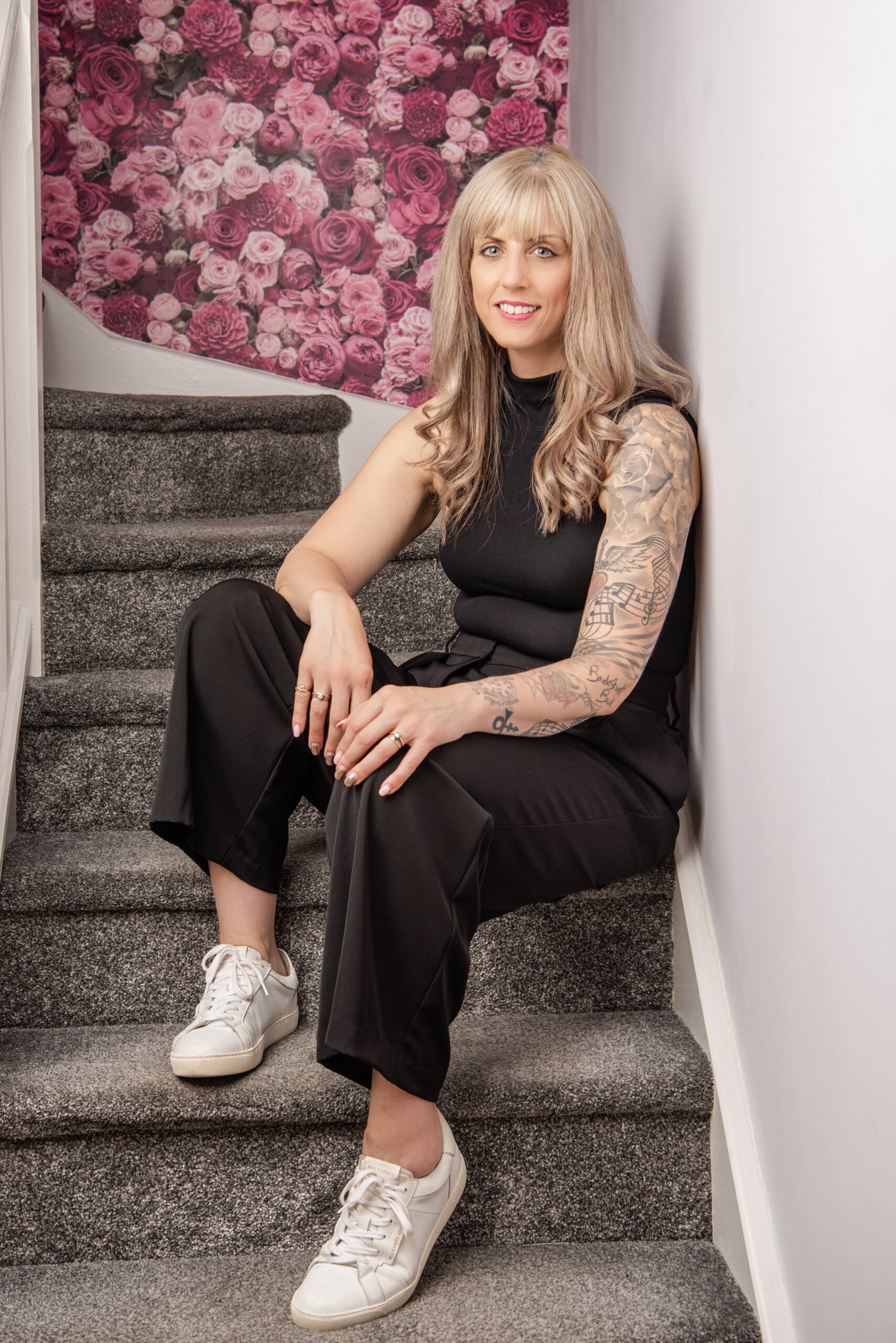
    How many leadership professionals do you know with tattoos? Not just a dainty star or hidden butterfly, but a full sleeve plus more?

    Well, probably more than you think! My background is high end ladies fashion retail. Think dresses for ascot with matching hat, bag and shoes. Not the look you’d associate with my current ‘day off’ style.

    When I joined as a management trainee, I had one little butterfly tattoo, well hidden on my shoulder. However, I worked with a Deputy Manager who was much more ‘decorated’, very confident with their ink, quite a strong attitude and seemingly quite proud of it. However, they were also a really good people leader.

    Yet, under the surface, we were navigating an environment where brand standards loomed large, and tattoos didn’t ‘fit the look’.  We worked for a ‘command and control’ leader – office based, rarely seen by their team except to give orders.

    So, when they told the deputy to cover their tattoos with their clothes or plasters, I learned quickly to keep my own hidden. That moment sparked a silent, personal tension: Could I be seen as credible while showing my true self?

    However, what I hadn’t seen was my tattooed colleague (and main management influence at the time), pushing boundaries, not displaying true inspiration to others. They led with confidence and authenticity, and their customer service was outstanding. But behind the scenes, moments of arrogance and poor attitude occasionally chipped away at the professionalism they showed in front of others.

    So in my 23 year old reflection, I’m now sat wondering, who was I most intimidated by and who was in the right? The deputy or the manager?

    My experience tells me that… neither of them were right.

    The manager was in the wrong for not seeing the person behind the ink that was on the shopfloor, leading her team and driving great customer service. They were also wrong for leading in the ‘tell’ style, not being seen by their team as a role model and clear inspirational leader.

    The colleague was in the wrong for their unprofessional traits behind the scenes. It left me wondering, do we have to wear a mask when we go out on the shop floor?

    I also wonder, would my little butterfly have even been questioned if it had gone on display? Was there a personal conflict between the two leaders that I didn’t know about? I’ll never know the answer to that.

    There’s an element of leaving ‘life’ behind when we are out there on the shopfloor, representing the brand and putting customers first. As it states in the very famous book ‘Fish!’ by Lundin, Paul and Christensen:

    Choose Your Attitude

    Be Present

    Make Their Day

    This philosophy was adopted by my brand and became our customer service mantra. It helps us to stay focused on what we are there for and our purpose at work. But I do believe we need to bring some of our true self to that as well. Something, I feel neither my manager nor my deputy manager did very well.

    So, why am I telling you this?

    Well, on those days when I choose long sleeved tops to cover the ink, these two people often buzz into my head and leave me feeling like I can’t show my true self. Now, I should say at this point, my ink is simply a meaningful display of inspiration, music, song lyrics, quotes and many, many love hearts… pretty much a live tour through my personal Instagram account!

    Because of that, it can open discussions, it often becomes a talking point because they get noticed and then opinions and preferences are discussed… some days I don’t feel like starting that conversation. Some days they are just for me, whether I have them on display or not.

    The Grandad Test

    Another side note for consideration is my amazing grandad. Now, this man can do little wrong in my eyes. He’s a complete one off, absolutely idolises me and is a continuous challenge of amusement and frustration. He absolutely hates tattoos more than anyone I know!

    So, when his beloved first born granddaughter started to gather up the ink at a pace he couldn’t keep up with, he realised he had to start curbing the use of words like ‘disgusting’, ‘awful’ and ‘terrible’. Words that have added to my perception of the rebel image tattoos seem to have.

    I took the time to ask him when writing this, why he felt this way… he wasn’t really sure but he was certain that he still didn’t like them! I got the feeling it was a belief or a judgement that he’d built around them. Seeing the people that had them as silly – like, ‘why would they want to do that?’.

    I explained to him that there is meaning behind them usually and people use them as a way to express themselves or their passions. He understood but didn’t really shift, even when his only two granddaughters displayed so many and he loved us unconditionally. The amusement of this continued when I asked him, ‘even if it’s a reference to The Backstreet Boys?’, to which he responded, ‘I don’t care if it’s the bloomin’ frontstreet boys!!!’.

    Well after that statement, I think it was certain that he still holds the same beliefs, but has certainly come to accept them and understands that having them doesn’t change the person underneath.

    Shock Factor

    Each job I’ve had, the long sleeves are there then a work night out arrives and the gasps of shock and adoration as colleagues react. Usually with ‘oh wow, I never thought you’d have tattoos’, ‘I didn’t expect that’, ‘they are so cool’ etc. So, if most people know they are there, why do the sleeves come back out for the office, or even for the teams calls?

    I’ve sweated through hot summer office meetings and felt unprofessional if people see my tattoos at work.

    This reminds me of that representation of the brand from retail days again. Those customer mystery shops and maintaining the professional image. The fear of the judgement is there. But how do people know whether I’m professional or capable based on my image?

    I think the question is ‘when is it appropriate?’. For example, you wouldn’t question a musicians capability to do their job if they had full tattoo sleeves. If anything it enhances the image. So, why is it acceptable in some fields and not others?

    As I’ve been travelling through this recent career journey, authenticity is becoming a clear value for my brand. And I am my brand.

    So, I’ve tentatively had the shorter sleeves out, the Instagram posts show my ‘day off’ style a little more with tattoos on show. It’s feeling a bit more honest. Last year, my first coaching conference in London, I bravely wore short sleeves, keeping close to the reminder that I am representing my brand so I have to be ‘me’.

    Recently, I was delivering training at a national event. I was so excited and then I discovered that it would be 30 degree heat with no air conditioning! Frantically looking four outfits that covered my ink, off I went.

    Until night one, after a full day in the heat and a long cold shower, I decided to brave it in the bar. My business partner hadn’t even seen the fully sleeve of ink so when I knocked on her hotel room door, I was nervous and ready to explain that I was too hot to wear sleeves… She was so excited when she saw them and guess what, still wanted to be in business with me! I think in my mind, I was worried I’d be seen differently and that ‘unprofessional’ perception again!

    But the real excitement came the next day in one of the training sessions. I was talking about self-confidence and being our true selves. I told a much shorter version of this blog to set the scene of what we perceive as ‘professional’ and what it actually means. One of the delegates came to me at the break and expressed her relief at my story. She said she had no idea why but she felt she couldn’t be herself at work and felt she should keep her tattoos hidden. The gratitude and comfort she showed in her feeling of being seen and less alone in this seemed to unlock something within her.

    Now, I wouldn’t say that from now on I’ll be fully tattooed up in every coaching session, business meeting, Instagram post or work event. I’m pretty sure it won’t happen when I’m delivering training for other companies.

    However, I am feeling braver. I know my worth. I’ve got the goods and all the right stuff to show up as a full on leadership professional. I even just did my CMI ‘Manager of the Week’ interview with a sleeveless top on… but I’m not quite ready for the promo shots to include the ink!

    However, they are there, they are part of me and my story and they mean a great deal to me. So, I’m staying authentic and sticking to my brand.

    And so, as I close this blog, I can’t finish with anything other than this really can I…

    Be the change you wish to see, your passion is your power!