

How Reflection Transforms Learning On and Off the Table
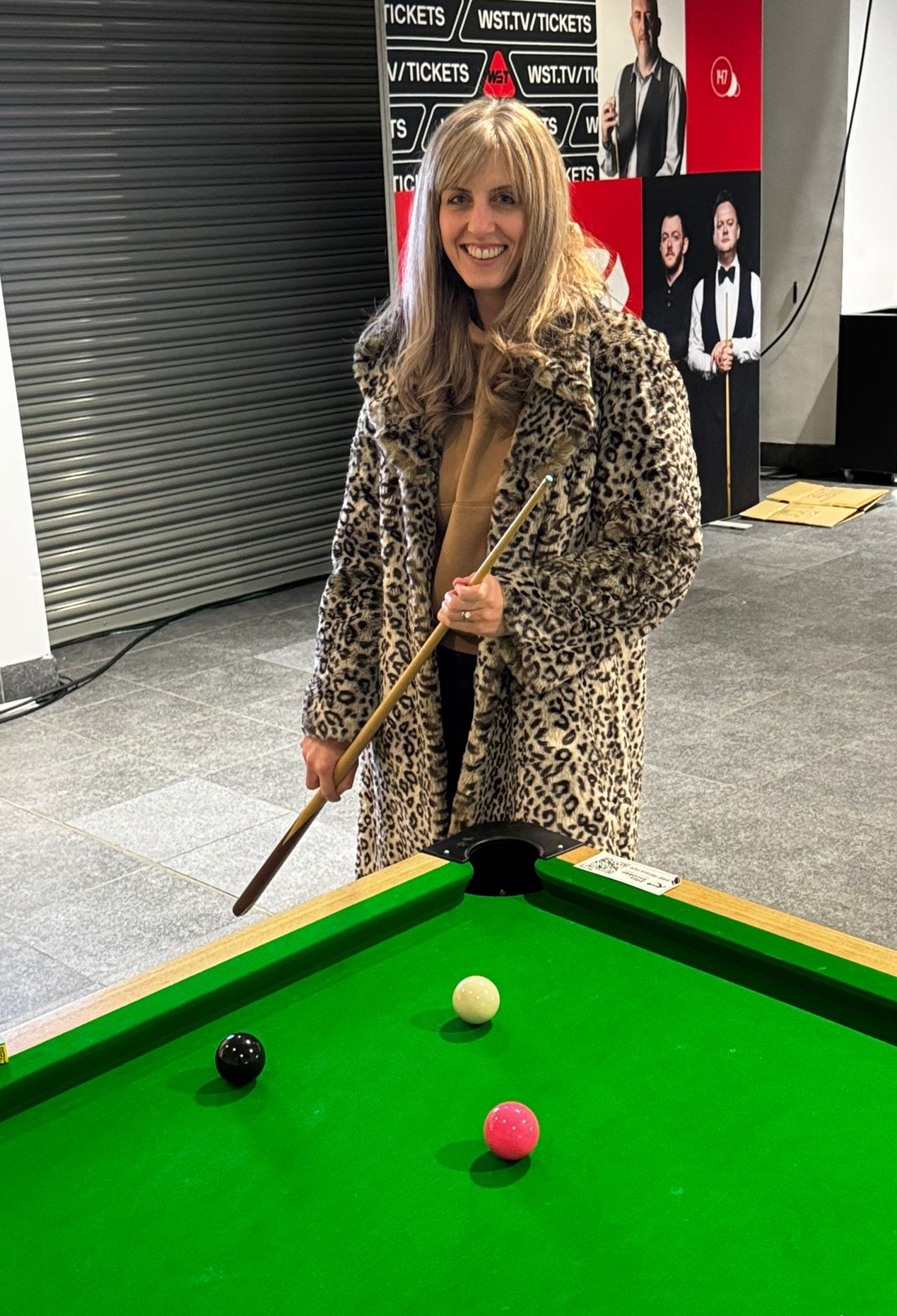
I’ve been inspired to write this months blog thanks to the many snooker tournaments currently filling my tv and a recent visit to the championships. So, I encourage you to ‘take a break’ (pun intended) and enjoy this read.
Watching the championships reminds me how much mastery relies on repetition and reflection — something that’s been front of mind as I begin my new L&D qualification. Whilst I’ve been in the industry for a long time, I haven’t had formal learning in it for around 20 years. I wanted some tangible evidence of the work I’m doing in both my employed and self-employed work and also an up to date learning on the landscape of L&D as a whole.
In a recent training input, the tutor used the analogy that the training session is like a gym induction.
Once you’ve had your gym induction, are you immediately fitter and healthier?
No, what makes the difference is the repetition, consistency and use of that learning.
Remember my quote from a while back ‘Personal & Professional Development is a Lifelong Journey’.
Well this came into my mind again. It’s not one and done! We can’t expect someone to learn something once and become an expert in it, or perhaps even remember it! And in a world overflowing with information, that message feels more important than ever.
Nowadays we’re surrounded by learning noise. Emails arrive packed with links to more resources, social media feeds point us to articles, podcasts, webinars, courses… it’s endless. You could spend an entire day consuming content and still feel like you’ve learned nothing.
How are we supposed to remember it all?
The truth is: we’re not. You don’t have to follow every link, save every post, or absorb every idea. It’s perfectly fine to read something and let it go — and it’s equally fine to dive deeper when something genuinely resonates.
This is where choosing just enough becomes essential. Not everything is meant for you. Letting some things pass you by isn’t a failure; it’s a strategy. What matters is the quality of what you engage with, not the quantity. The growth comes from reflection, absorption, and repetition — not from trying to consume everything that crosses your screen.
With permission, I’m sharing a little real life story about the power of reflection here.
When I first began my coaching qualifications, I excitedly wanted to try the tools and questions out on my husband. It did not go to plan! Now sidenote here, you absolutely can’t be a coach for your spouse or even family members. But for the sake of practice he agreed.
But he resisted the interaction and didn’t see the value in it, once quoting to me ‘I’m un-coachable’.
Oh dear, not a great start when I was seeing great benefits from everyone else!
So, I didn’t try again, but I did press on with my journey and he was there for it all, by my side, watching the growth of me and the business, seeing the feedback coming in, creating great marketing content for me (sometimes reluctantly!).
Around a year ago I noticed him stuck in a loop with his snooker. A game he’s loved all his life – and one he’s genuinely good at. He wasn’t winning games, felt he was letting his team down, not seeing any growth in his practice and it was leading to an anxiety around playing and almost an avoidance. So, conversation style, I gently started with the coaching questions around what was going on. What we got to together was the ‘stuckness’ in any improvement.
The key here was to dig deep on the why and find out what was going on.
Why was it important? What needs to be different? How do I feel when I play? What feelings come up ahead of a game?
Then we can take action. We can know the barriers that are needed to overcome.
I suggested very small journal notes after every game or practice. How did it feel? What went well? What could be better?
And the most important one: ‘What will I do differently next time?’
Over a period of 3-4 months, the transformation was incredible. The enjoyment came back, the deeper understanding of the way he played the game, repetition after repetition of shots. Suddenly there was no anxiety around game nights, win or lose there was still enjoyment. Every reflection from them gave insight into what needs focus at the next practice. This growth is giving him the most important thing: confidence.
This confidence has led him to be brave enough to now do his own snooker coaching qualifications. The next part of the growth journey for him and I could not be prouder.
It was the biggest win for me when he said what a difference the coaching questions and reflections had made to him. And to have him admit that maybe he isn’t un-coachable!
Watching him shift from frustration to confidence reminded me how powerful reflection really is. It wasn’t new cues or new techniques that changed anything — it was the way he started thinking about his game, noticing patterns, and choosing what to focus on next. And that’s where the difference between types of coaching really shows up.
He’s had sports coaching before, but this is where the context of coaching gets tricky. In sports, the coach is expected to know the game inside out. Their role is to teach technique, correct form, and improve the practical skill.
In the coaching profession I’m in, it’s completely different. I don’t need any expertise in the client’s world. The shift happens through the conversation — the questions, the reflection, the psychological insight.
Sports coaching improves the skill. Professional coaching improves the self that uses the skill.
Those sports coaching sessions he’d had weren’t wrong; they were simply focused on technique — mentoring, really. But without reflection on how to apply that skill, what gets in the way, or how mindset shapes performance, the impact only goes so far.
That’s why sports psychology exists: it’s one thing to get the shot right, and a whole other thing to get yourself right.
And that’s exactly what I’m noticing in my own studies too. The content matters, of course — but it’s the reflection, the application, and the mindset that turn learning into growth. Whether it’s snooker, leadership, or L&D practice, the real change happens long after the session ends.
Growth comes from revisiting what resonates — the things that spark something in you — and choosing to practice them with intention.
The reason my husband kept going back to the snooker table and trying was the passion and lifelong love of the game. What the reflection has given is the depth to it and a passion to keep increasing skill and confidence.
A lot of what I’m currently learning in the qualification is how we measure the effectiveness of learning. That’s way down the line after the actual training. By that point how can we measure it if it was so far past?

How do we know what impact that specific training alone made? Because it’s 100% not just the content. No doubt a great trainer can make a difference in the initial spark but to make it stick, we have to digest, revisit and use it to really make that change / improvement.
Every training session or workshop I go to I make notes. I have a book for CPD events where I want to make a difference to / for me and then a book if it’s actually training or study. Why are they different? Not sure. Sometimes the big study one feels too work like to pick up, but I’ve always got time or interest in picking up the CPD book and revisiting things there. Back to the quote…
‘Personal & Professional Development is a Lifelong Journey’.
In the sessions I make little notes or stars next to things from the session, from the trainer or speaker suggestions or quotes from the slides (buy this book, research this topic, listen to this podcast, watch this YouTube clip, include this in a blog etc etc).
Sometimes I forget to come back to it straight away, which is why I need to write so much down. I don’t contain things well so the session will have no further impact on me than in that moment if I don’t have something to come back to and reflect on.
So, what does all of this tell us?
Whether it’s a gym induction, a snooker practice, or a training session, the session itself is only the beginning. The real growth comes afterwards — in the reflection, the repetition, and the choices we make about what to carry forward.